Bone health plays an important role in maintaining mobility, physical strength and overall quality of life. However, changes in bone strength are not always noticeable until a fracture or other complication occurs. This is why medical professionals may recommend a bone density test to understand bone health and identify potential concerns at an early stage.
People searching for a bone density test near me are often looking for a convenient way to assess their bone health, particularly as they grow older or develop certain risk factors. Bone density testing helps measure the amount of minerals, primarily calcium, present in specific bones. The results provide useful information about bone strength and can help doctors assess the likelihood of osteoporosis and fractures.
Understanding how this investigation works, who may need it and what the results indicate can help individuals make informed decisions about their healthcare.
What Is a Bone Density Test?
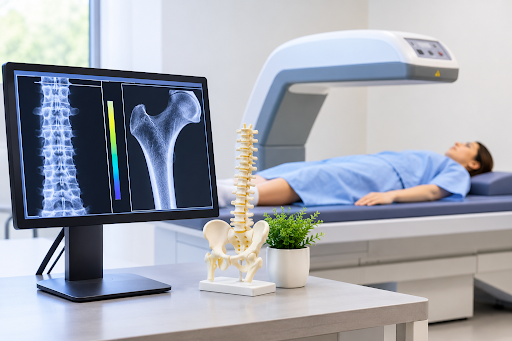
A bone density test, also known as bone mineral density (BMD) testing, is a diagnostic investigation used to measure the mineral content and density of bones. It is commonly performed using a technology called Dual-Energy X-ray Absorptiometry (DEXA or DXA).
The test generally examines areas such as the hip and lower spine, as these locations are important for assessing fracture risk. It uses a low dose of X-rays to evaluate bone density and provide measurements that doctors can interpret.
Unlike conventional X-rays, which are primarily used to identify visible structural changes or fractures, a bone density scan helps detect reduced bone mineral density before serious complications develop.
The investigation is generally quick and non-invasive, making it a useful tool for assessing bone health when clinically indicated.
Why Is Bone Density Testing Important?
Bones naturally undergo changes throughout life. Bone mass generally increases during childhood and adolescence, reaches its peak in early adulthood and may gradually decrease with age.
In some individuals, this reduction happens faster due to hormonal changes, nutritional deficiencies, certain medical conditions or medication use.
Reduced bone density can increase the risk of osteoporosis, a condition in which bones become weaker and more susceptible to fractures.
Bone density testing is important because it can help:
- Identify reduced bone mineral density.
- Assess the risk of osteoporosis.
- Evaluate the possibility of fractures.
- Monitor changes in bone health over time.
- Help doctors assess the effectiveness of prescribed osteoporosis treatment.
Early identification of reduced bone density can help healthcare professionals recommend suitable lifestyle changes, further investigations or treatment when necessary.
When May a Bone Density Test Be Recommended?
A bone density test is not necessary for everyone. Doctors generally recommend it based on age, medical history and individual risk factors.
Some situations in which testing may be considered include:
1. Postmenopausal Women
Oestrogen plays an important role in maintaining bone strength. After menopause, declining oestrogen levels can accelerate bone loss. Women aged 65 and above are generally recommended for osteoporosis screening under established clinical guidelines. Younger postmenopausal women may also require testing if they have additional risk factors.
2. Older Adults
Age-related changes can gradually reduce bone mineral density. Older adults may benefit from testing to evaluate osteoporosis risk, particularly when they have a history of fractures or other contributing health conditions.
3. Individuals With a History of Fractures
A fracture following a minor fall or relatively small impact may indicate reduced bone strength. Doctors may recommend bone density testing to investigate possible osteoporosis and evaluate future fracture risk.
4. People With Certain Medical Conditions
Some medical conditions can affect the body’s ability to maintain healthy bones. These may include thyroid disorders, conditions affecting nutrient absorption and certain hormonal imbalances.
A doctor may recommend a bone density assessment depending on the underlying condition and its potential effect on bone health.
5. Individuals Taking Certain Long-Term Medications
Long-term use of certain medications, particularly corticosteroids, can contribute to bone loss. People taking these medicines may require bone health monitoring based on their treatment duration and individual risk profile.
These recommendations are not universal screening rules. A healthcare professional should assess individual circumstances before advising a scan.
ISCD+1
Understanding Bone Density Test Results
Bone density test results help doctors understand whether bone mineral density is within the expected range or lower than normal.
Two commonly used measurements are the T-score and Z-score.
| Measurement | What It Indicates |
| T-score | Compares bone density with the average peak bone density of a healthy young adult reference population |
| Z-score | Compares bone density with the expected range for someone of similar age and sex |
For postmenopausal women and men aged 50 and above, T-scores are commonly interpreted using the following categories:
- Normal: A T-score of -1.0 or above.
- Low bone mass (Osteopenia): A T-score between -1.0 and -2.5.
- Osteoporosis: A T-score of -2.5 or below.
These measurements help doctors evaluate bone health and decide whether additional assessment or treatment is required. Results should always be interpreted alongside medical history, age and fracture risk rather than considered in isolation.
ISCD+1
What Happens During a Bone Density Scan?
A DEXA scan is generally a straightforward and non-invasive procedure. Understanding the process beforehand can help individuals feel more comfortable during their appointment.
The process usually involves:
- Registration: The diagnostic centre records relevant patient details and medical history.
- Positioning: The patient lies on a scanning table in the recommended position.
- Scanning: The machine uses low-dose X-rays to measure bone mineral density, commonly at the hip and lower spine.
- Image assessment: The collected measurements are processed to generate bone density results.
- Reporting: The findings are reviewed and provided for interpretation by the treating doctor.
The procedure is generally painless and does not involve injections. The actual scan time may vary depending on the areas being examined and the equipment used.
How to Prepare for a Bone Density Test
Preparation for a bone density scan is usually simple, but following the diagnostic centre’s instructions is important.
Consider these precautions before your appointment:
- Wear comfortable clothing without metal zippers, buttons or accessories around the scanning area.
- Inform the technician if you are pregnant or may be pregnant.
- Mention any recent imaging investigations involving contrast material or nuclear medicine.
- Inform the diagnostic team about calcium supplements and ask whether they should be temporarily avoided before the scan.
- Carry previous bone density reports, if available, to support comparison with earlier results.
Fasting is generally not required for a standard DEXA scan. However, always follow the specific instructions provided by your diagnostic centre.
Maintaining Bone Health Beyond Diagnostic Testing
A bone density scan provides valuable information, but maintaining healthy bones also requires consistent lifestyle habits.
Some practical measures that support bone health include:
- Balanced nutrition: Include calcium-rich foods such as milk, yoghurt, green leafy vegetables and other suitable dietary sources.
- Adequate vitamin D: Maintain healthy vitamin D levels through appropriate sunlight exposure, diet and supplements when recommended.
- Regular physical activity: Weight-bearing exercises such as walking and resistance training can support bone strength.
- Avoid smoking: Smoking can negatively affect bone health and contribute to reduced bone density.
- Limit alcohol consumption: Excessive alcohol intake may increase the risk of bone loss and fractures.
- Follow medical advice: Individuals diagnosed with osteopenia or osteoporosis should follow their doctor’s recommended treatment and monitoring plan.
These habits can contribute to better long-term bone health, although lifestyle changes alone may not be sufficient for individuals with established osteoporosis.
Choosing the Right Diagnostic Centre for Bone Density Testing
When looking for a bone density test near me, selecting a diagnostic centre with appropriate imaging technology and experienced professionals is important.
Consider the following factors before scheduling an appointment:
- Availability of suitable DEXA scanning technology.
- Experienced radiologists and trained technical staff.
- Proper imaging and reporting procedures.
- Clear communication about preparation and appointments.
- Accessibility and convenient location.
- Availability of previous reports for comparison when required.
Choosing a reliable diagnostic facility helps ensure that the investigation is conducted appropriately and that the results are available for medical evaluation.
Get Your Bone Health Assessed at Saraf’s Diagnostic Centre
Understanding your bone health is an important part of preventive healthcare, particularly as you grow older or develop conditions that may affect bone strength. Timely testing can help identify reduced bone mineral density and provide doctors with useful information for assessing osteoporosis and fracture risk.
Saraf’s Diagnostic Centre offers bone density testing using DEXA scan technology to support the assessment of bone health. With diagnostic facilities and professional imaging services, the centre helps individuals access investigations required for their healthcare needs.
If you are looking for a bone density test near me, visit the Bone Density Test service page to learn more about the available facility.
You can also contact Saraf’s Diagnostic Centre to enquire about appointments, testing procedures and other relevant details.
Taking care of your bones starts with understanding their health. With appropriate medical guidance and timely diagnostic assessment, you can make more informed decisions about maintaining bone strength and mobility.