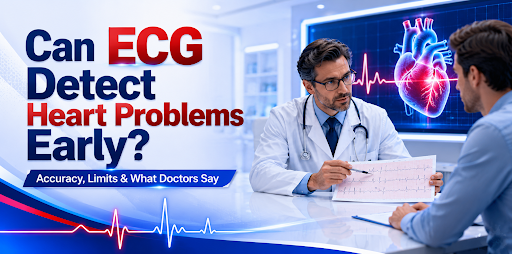
Heart disease continues to be one of the greatest health issues across the globe today, and early diagnosis is a key factor in avoiding potential risks. Individuals have been experiencing symptoms such as chest pains, irregular heartbeat, lightheadedness, or exhaustion, among others, unaware that they are indicators of some heart problems. The electrocardiogram (ECG) comes in handy in such a situation. In fact, there have been many instances where patients search for an ECG near me as they seek quick and effective methods to measure their heart activity.
An electrocardiogram measures electrical impulses from the heart. Through this procedure, doctors are able to determine any anomalies in the rhythm of the heart, as well as the possibility of previous heart damage, and if it’s working normally. Despite being widely used and very efficient, it’s important to know more about its effectiveness and possible limitations as well.
Understanding How an ECG Works
ECG records electrical impulses generated by the heart, which coordinate each heartbeat. Electrodes are attached to the patient’s body: the chest, arms, and legs. Recorded electrical activity appears in the form of wave patterns.
The procedure is not invasive and is performed very quickly, often taking only several minutes. The test is prescribed by doctors as a part of a routine health checkup, before surgery, or if any signs of heart issues are found.
ECG can help to diagnose:
- Irregular heartbeats (arrhythmia)
- Current heart attacks or previous episodes
- Limited supply of blood to the heart
- Increased size of heart chambers
- Electrolyte disorders
- Medication side effects affecting heart rhythms
Because of its efficiency and availability, ECG is often used as an initial method of testing patients with possible heart disease.
Can ECG Really Detect Heart Problems Early?
In most cases, yes. ECG may show potential problems that exist before severe heart conditions manifest themselves. For instance, some heart rhythm disorders can be detected using an ECG along with decreased supply of blood to the heart muscle.
Many doctors prescribe regular ECG tests to those patients who:
- Have high blood pressure
- Live with diabetes
- Smoke regularly
- Have high cholesterol
- Experience stress-related symptoms
- Have a family history of heart disease.
Early ECG detection may allow doctors to prescribe certain changes in lifestyle, drugs, and other tests before the condition becomes dangerous.
However, the efficiency of using the ECG report will depend on interpreting it, considering the medical history of the patient, his or her complaints, and other tests if needed.
Conditions an ECG Can Identify
Arrhythmias
One of the most common indications for performing an ECG is detecting arrhythmia. Some of these irregular heartbeats are benign; however, some may increase the risk of stroke or heart attack.
Heart Attack Indicators
An ECG allows one to see the abnormalities that appear due to a heart attack and even the damage that was previously done to the heart.
Structural Heart Changes
ECG patterns may reveal the enlargement of heart chambers due to hypertension and other diseases. In emergency settings, it is often the first diagnostic test performed.
Reduced Blood Supply
If the heart muscle is not receiving enough oxygen-rich blood, the ECG may show abnormalities linked to coronary artery disease.
What Doctors Say About ECG Accuracy
The use of ECG in diagnostics has been valued by doctors because of its ability to produce almost immediate results of heart function. However, physicians have warned about the fact that a particular test may not help to diagnose all heart disorders.
The accuracy of ECGs will depend on several factors, which include:
- The type of heart condition
- Whether symptoms are present during the test
- The patient’s age and medical history
- The quality of interpretation
If someone suffers from arrhythmia and his or her palpitations are intermittent and do not manifest themselves while taking an ECG, then the picture would be clear despite existing problems.
That is why additional investigations may be required:
- Echocardiography
- Stress test
- Holter monitor
- CT scan
- Blood tests
Many diagnostic centers usually combine the results obtained through the use of ECGs and other high-quality pathology and imaging tools.
When an ECG May Not Be Enough
Despite the usefulness of the method, it has certain limitations. A normal ECG reading does not mean that one does not have heart disease at all.
There may be a variety of cases when heart disease is not detectable through an ECG, for instance:
- Mild coronary artery disease
- Temporary rhythm disturbances
- Structural changes in their early stages
- Symptoms that occur only when exercising
That is why patients who have chest pain, dyspnoea, or inexplicable tiredness need further assessment even if their electrocardiogram is normal.
It is common practice among many health experts to recommend undergoing routine preventive tests instead of allowing symptoms to deteriorate. The individuals looking for EGC near me should be encouraged to select such facilities that provide a complete range of diagnostics, including blood and imaging tests, since it will allow completing further investigations quickly and without delays.
Symptoms That Should Never Be Ignored
Though some symptoms associated with the heart condition may be mild at first, seeking medical advice is necessary in case you have:
- Chest pain or tightness
- Abrupt breathing difficulties
- An accelerated heart rate or palpitations
- Inexplicable dizziness
- Periods of fainting
- Constant fatigue
- Leg swelling
Getting immediate medical advice will help you avoid any complications and treat the problem effectively.
Preparing for an ECG Test
For most patients, preparing for an ECG test is very easy; however, you can take the following measures to ensure that the result will be accurate:
- Choose comfortable clothes
- Do not use lotion or oil on the chest
- Inform the doctor about medications being taken
- Maintain calmness during the test
The test is safe, and anyone, regardless of age, can undergo it. Additionally, the process does not require radiation exposure.
Why Preventive Heart Screening Matters Today
Many contemporary living habits include working for extended periods of time, experiencing excessive stress, failing to engage in regular exercise, and consuming unhealthy foods. All these things become reasons that cause many cases of heart disease, even in young people.
It is necessary to conduct heart screening tests on a routine basis in order to detect silent symptoms as early as possible. Diagnostic tests are crucial for those who have certain predispositions to developing heart disease, including obesity, diabetes, bad eating habits, and an inactive lifestyle.
The advanced facilities of diagnostic centers today offer a variety of additional health-related services to patients. They include preventive care, pathology testing, radiology services, full body examination, heart screening, and conducting all kinds of blood tests.
A Smarter Step Towards Heart Awareness
Neglecting early symptoms might sometimes result in delayed diagnoses as well as more severe health conditions at a later stage. Although an ECG is not always 100% reliable on its own, it still serves as one of the fastest and most efficient ways to examine your heart initially. Therefore, if you feel any suspicious symptoms or just need additional peace of mind regarding your cardiovascular health, looking for an ECG near me will be the right decision.
In order to conduct precise diagnosis and provide preventive health care assistance, many people opt to visit Sarafs Diagnostic Centre for services such as cardiovascular testing, pathology testing, preventive health checks, radiology, and diagnostic assistance.