Blood tests are among the most commonly recommended investigations for understanding general health, monitoring an existing condition, or helping a doctor investigate specific symptoms. From routine screening to more advanced pathology investigations, the results can provide useful information about different aspects of the body. If you are planning a blood test in Ville Parle, knowing what common tests involve, how to prepare, and how to read the basic information in your report can make the process easier.
Saraf’s Diagnostic Centre provides routine and advanced pathology services along with health checkups and home sample collection. Its website also highlights in-house blood test processing, reports through WhatsApp and email, and home visits for testing.
Why Are Blood Tests Commonly Recommended?
A blood test can be used for several reasons. A doctor may recommend one when a person has symptoms that require further evaluation, during a routine health checkup, or to monitor an existing health concern.
Blood tests can also be useful as part of preventive healthcare. Depending on the person’s age, symptoms, medical history and doctor’s recommendation, different investigations may be advised rather than one standard test for everyone.
It is important to remember that a laboratory report is one part of the overall assessment. A healthcare professional considers the test results along with symptoms, medical history, physical examination, and other investigations before reaching a diagnosis.
Common Blood Tests You May Come Across
Diagnostic centres offer a wide range of pathology investigations. Saraf’s Diagnostic Centre specifically describes its services as covering routine as well as advanced pathology testing. Its website’s information on diagnostic testing mentions commonly performed investigations such as Complete Blood Count (CBC), blood sugar, lipid profile and thyroid function tests.
Some commonly encountered blood tests include:
- Complete Blood Count (CBC): This evaluates different types of blood cells, including red blood cells, white blood cells, and platelets.
- Blood Sugar Tests: These measure glucose levels and may be recommended for screening or monitoring blood sugar-related conditions.
- Lipid Profile: This measures blood lipids such as cholesterol and triglycerides and can form part of cardiovascular risk assessment.
- Thyroid Function Tests: These are used to assess thyroid function and may be recommended when symptoms or medical history suggest the need for evaluation.
- Other Pathology Tests: Depending on the individual’s requirements, a doctor may recommend additional routine or advanced investigations.
The exact tests required should be decided according to the person’s health needs and, where appropriate, medical advice rather than simply selecting a large number of tests.
How to Prepare Before a Blood Test
Preparation depends on the test being performed. Some blood tests require fasting, while others may not. Therefore, it is important to confirm the preparation instructions before visiting the laboratory.
If fasting has been specifically advised, follow the instructions regarding food and beverages carefully. Do not assume that every blood test requires fasting.
A few practical steps can also make the process smoother:
- Confirm whether fasting is required for your particular test.
- Follow any instructions given by your doctor or diagnostic centre.
- Stay adequately hydrated unless you have been specifically advised otherwise.
- Keep previous reports and prescriptions available if they are relevant.
- Inform the healthcare professional about medicines or supplements you take if asked.
- If you are using a home collection service, keep a clean and suitable space ready for sample collection.
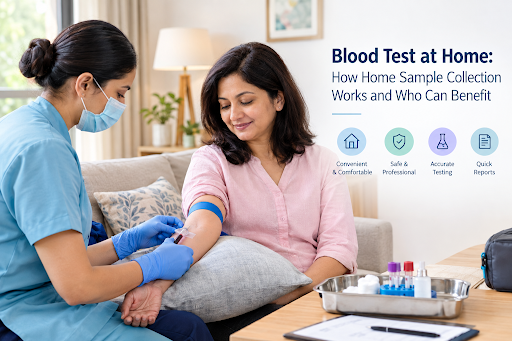
Saraf’s Diagnostic Centre also provides home sample collection, which can be useful for people who prefer to have their samples collected at home. Its website notes that home visits are available for testing and highlights quick sample collection at home.
What Happens During a Blood Test?
A blood sample is generally collected by a trained healthcare professional using appropriate collection equipment. The sample is then processed for the investigations requested.
For patients, the process is usually straightforward. The most important part is to provide the correct information when registering for the test and follow any preparation instructions given beforehand.
For those who find it difficult to visit a laboratory, blood test at home services provide another option. Saraf’s Diagnostic Centre offers home sample collection and states that its home visit service is available for testing.
Understanding the Numbers in Your Blood Test Report
Receiving a report with multiple numbers, abbreviations and reference ranges can sometimes feel confusing. However, it is not advisable to interpret an individual value in isolation.
Most laboratory reports include a test result along with a reference range. The reference range provides a comparison used by the laboratory for interpreting that particular measurement. The range can differ depending on the test, laboratory method and other factors.
For example, a report may indicate that a particular value is above or below the stated reference range. This does not automatically mean that a person has a disease. Results need to be considered in context, and healthcare professionals may look at multiple results together.
When reviewing your report, pay attention to:
- The name of the test performed.
- Your reported value.
- The reference range provided by the laboratory.
- Units used for measurement.
- Any flags or indicators showing that a result falls outside the stated range.
- Comments or notes provided by the laboratory.
If a result appears abnormal, borderline, or unexpected, discuss it with your doctor rather than concluding the number alone.
Why the Laboratory and Reporting Process Matters
The usefulness of a diagnostic test depends not only on having the test performed but also on proper sample collection, processing and reporting. Patients should therefore consider factors such as the range of available tests, laboratory facilities, sample collection options and accessibility when selecting a pathology laboratory in Mumbai.
Saraf’s Diagnostic Centre states that it has fully computerized facilities, in-house blood test processing and a three-level quality check at each step. The centre also states that reports are available through WhatsApp and email and highlights reports within 24 hours on its website.
For people looking for a diagnostic centre near me, accessibility can also matter. Saraf’s Diagnostic Centre is located at Vyom Arcade Building off Subhash Road in Vile Parle East, Mumbai, and also lists a blood collection centre in Andheri East.
When Should You Speak to a Doctor About Your Report?
A laboratory report should ideally be reviewed in relation to why the test was prescribed. If your doctor ordered the investigation because of particular symptoms, the result should be considered alongside those symptoms.
You should also avoid comparing your result directly with another person’s report. Age, sex, medical history, medications, lifestyle and other factors can affect laboratory values.
If several reports are available over time, your healthcare professional may also look at changes or trends rather than relying on one isolated result.
Making Blood Testing More Convenient
For many people, convenience is an important part of managing routine health checks. Saraf’s Diagnostic Centre offers health checkup services, routine and advanced pathology, and home sample collection. The centre also provides reports through digital channels, according to its website.
Whether you are visiting a diagnostic centre or arranging a home collection, the basic approach remains the same: understand what test has been recommended, follow the preparation instructions and discuss the results with an appropriate healthcare professional.
A Practical Choice for Accessible Diagnostic Care in Ville Parle
For anyone planning a blood test in Ville Parle, having access to routine and advanced pathology services, home sample collection and convenient digital reporting can make the testing process easier. Saraf’s Diagnostic Center is the best option to opt for when you are looking for accessible diagnostic services in the area, with its Ville Parle East centre, pathology services, home visit facility and multiple diagnostic services available under one roof.
Frequently Asked Questions
1. Do all blood tests require fasting?
No. Fasting requirements depend on the specific test being performed. Some investigations may require fasting, while others do not. It is best to confirm the preparation instructions before your appointment.
2. Can I get a blood test done at home?
Yes. Saraf’s Diagnostic Centre provides home sample collection services. Its website states that home visits are available for testing and highlights convenient sample collection at home.
3. What should I do if my blood test result is outside the reference range?
An out-of-range result does not automatically indicate a medical condition. Discuss the result with your doctor, who can interpret it based on your symptoms, medical history, and other relevant findings.