Getting a blood test no longer always means travelling to a diagnostic centre, waiting for your turn, and adjusting your schedule around a laboratory visit. With blood test at home services, patients can have their blood samples collected from the comfort of their own homes. This can make routine testing more convenient, particularly for people who may find travelling difficult or prefer a home-based collection process. However, it is still important to understand how the process works, how to prepare, and what to look for when selecting a diagnostic service.
What Is Home Blood Sample Collection?
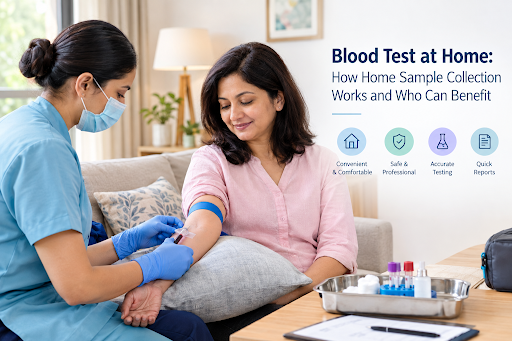
Home blood sample collection is a service in which a trained professional visits the patient’s home to collect the required blood sample. The sample is then taken to the diagnostic laboratory for processing and analysis.
The testing itself follows the laboratory’s usual procedures. The difference is simply where the sample is collected. Instead of travelling to a centre, the patient can complete the collection at home.
Saraf’s Diagnostic Center provides home visit services and highlights home sample collection as part of its diagnostic services. The centre offers routine and advanced pathology services along with other diagnostic facilities under one roof.
How Does the Home Sample Collection Process Work?
Although the exact procedure can vary depending on the test, home collection generally follows a straightforward sequence.
1. Book the Test or Package
The first step is to select the required test or health package and request a home collection appointment. Patients should confirm whether the selected test is available for home collection and whether any preparation is required.
Saraf’s website allows patients to book tests and select a visit type, along with the date, time, and other appointment details.
2. Follow Any Pre-Test Instructions
Some blood tests may require preparation before the sample is collected. Depending on the test, this can include fasting or following other instructions provided by the healthcare professional or diagnostic centre.
Patients should not assume that every blood test requires fasting. The preparation depends on the specific test, so it is better to confirm the requirements before the appointment.
3. Sample Collection at Home
At the scheduled time, a trained professional visits the patient’s home and collects the required blood sample using appropriate collection procedures.
For many people, this removes the need to arrange transportation or spend additional time travelling to a laboratory. It can be especially useful when a patient needs regular testing or finds travelling inconvenient.
4. Laboratory Processing
Once collected, the sample is taken to the laboratory for analysis. Saraf’s Diagnostic Center states that it has in-house blood test processing and provides routine and advanced pathology services. Its website also mentions quality checks at each step of its testing process.
5. Report Delivery
After the testing process is completed, reports can be made available digitally. Saraf’s Diagnostic Center states that reports are provided through WhatsApp and email, while its website also highlights reports within 24 hours.
Who Can Benefit From Home Blood Collection?
Home collection can be useful for different groups of patients, depending on their individual circumstances.
Senior Citizens
Older adults may find travelling to a diagnostic centre inconvenient, particularly when they need regular health monitoring. Home collection can reduce the need for unnecessary travel while allowing the required sample to be collected at home.
People With Limited Mobility
Patients recovering from illness, surgery or other conditions that make travelling difficult may find home collection more practical. It can also reduce the physical effort associated with travelling, waiting and returning home.
Busy Working Professionals
People with demanding work schedules may find it easier to arrange a collection appointment at home rather than spend additional time travelling to a laboratory.
Patients Requiring Regular Monitoring
Some patients may need repeated blood tests as part of ongoing medical care. Home collection can make these recurring appointments more manageable, subject to the test and healthcare provider’s requirements.
Families Managing Multiple Appointments
For households where more than one person requires testing, arranging collection at home may simplify the process and reduce the need for separate visits to a diagnostic centre.
What Should You Do Before a Home Blood Test?
A little preparation can make the collection process smoother. Before your appointment:
- Confirm whether fasting is required for your specific test.
- Follow any preparation instructions provided by your doctor or diagnostic centre.
- Keep your previous reports or prescription information available if relevant.
- Inform the diagnostic centre about any specific requirements before booking.
- Choose a comfortable, clean and well-lit area for the sample collection.
- Keep your contact details and appointment information accessible.
It is also important not to change prescribed medication or stop taking medicines simply because you are having a blood test unless your doctor specifically instructs you to do so.
What Types of Tests Can Be Done?
The tests available through home collection depend on the diagnostic centre and the particular test requirements. Blood testing may form part of routine health evaluation, disease assessment or preventive health screening.
Saraf’s Diagnostic Center offers routine and advanced pathology services and also provides health packages. Its Basic Package, for example, includes tests such as Complete Blood Count, fasting and post-lunch blood sugar, lipid profile, SGOT, SGPT, creatinine and uric acid, along with urine testing, ECG and digital chest X-ray. Patients should confirm which individual tests or packages are eligible for home collection when booking.
For people looking for a blood test at home, the important point is not simply convenience. The diagnostic laboratory, sample collection procedure, processing facilities and reporting system all form part of the overall testing experience.
What Should You Look for in a Home Collection Service?
Convenience is useful, but it should not be the only consideration when arranging a home sample collection. Before booking, patients can check:
- Whether the diagnostic centre offers the required test.
- Whether home collection is available in their location.
- Whether the centre explains pre-test preparation clearly.
- Whether trained professionals handle sample collection.
- How the laboratory processes and reports samples.
- How reports are delivered and accessed.
- Whether the centre has appropriate diagnostic infrastructure.
Saraf’s Diagnostic Center describes itself as a fully fledged diagnostic centre with pathology, radiology, cardiology and other diagnostic services. Its website also highlights experienced doctors, in-house blood test processing and home visits.
When Should You Visit a Diagnostic Centre Instead?
Home collection is convenient, but it may not replace every type of diagnostic visit. Some investigations require equipment, imaging facilities or procedures that can only be performed at a diagnostic centre.
For example, Saraf’s Diagnostic Center also provides services including digital imaging, cardiology, DEXA scans, mammography, audiometry and pulmonary function testing. These services involve facilities beyond simple blood sample collection.
If your doctor has prescribed multiple investigations, it can therefore be useful to ask the diagnostic centre whether all required tests can be completed through home collection or whether a centre visit is necessary.
Making Routine Testing Easier Without Skipping the Important Steps
Home sample collection can make diagnostic testing more convenient without changing the importance of proper preparation, professional collection and laboratory processing. For senior citizens, people with mobility limitations, busy professionals and patients requiring regular monitoring, it can reduce the practical difficulties associated with visiting a diagnostic centre.
When selecting a service, patients should consider the range of available tests, collection procedures, laboratory facilities and report delivery options rather than convenience alone. Saraf’s Diagnostic Center offers home visits alongside routine and advanced pathology, in-house blood test processing, digital reports and other diagnostic services. With its established diagnostic facilities and home collection option, Saraf’s Diagnostic Center is a reliable and suitable option to consider for a blood test at home, particularly for patients looking for convenient diagnostic care in Mumbai.
Frequently Asked Questions
1. Is a blood test at home as reliable as a test done at a diagnostic centre?
The reliability of a blood test depends on factors such as correct patient preparation, proper sample collection, handling, transportation, and laboratory processing. Home collection means that the sample is collected at the patient’s home and then processed by the diagnostic laboratory. Patients should follow the instructions provided for their specific test.
2. Do all blood tests require fasting before home collection?
No. Fasting requirements depend on the specific blood test. Some tests may require fasting, while others may not. Patients should confirm the preparation requirements with their doctor or diagnostic centre before the appointment.
3. Can senior citizens book home blood sample collection?
Yes, home sample collection can be particularly convenient for senior citizens who may find travelling to a diagnostic centre difficult. Saraf’s Diagnostic Center provides home visit services and specifically lists home sample collection among its diagnostic facilities.